Sound architecture
How the sound goes through FRIZZ, from the input to the outputs.
Signal flow
Section titled “Signal flow”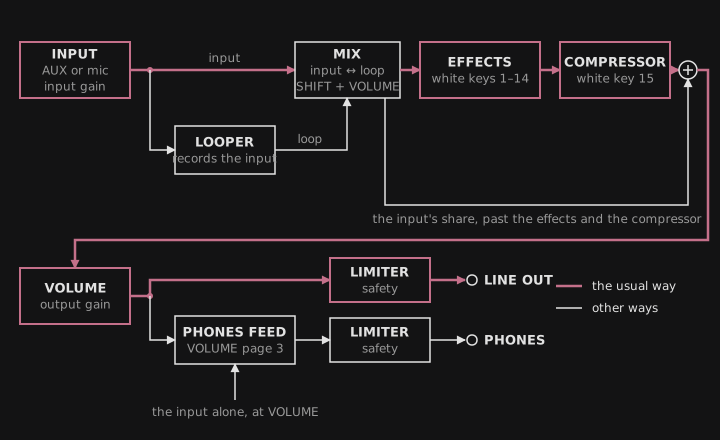
The input is AUX, or the built-in microphone while no cable is in AUX (see Input: AUX or the mic). It goes to the looper and, through the input/loop mix (SHIFT + VOLUME), to the effects on the white keys, then to the master compressor, VOLUME and a fixed safety limiter on every output. The looper records the input before the effects, so an effect is never printed into a loop. The settings page can send the input past the effects and the compressor instead; it joins again before VOLUME.
The master out always carries the whole signal; the headphones carry the same, or the input alone (see VOLUME knob).
Effect chain
Section titled “Effect chain”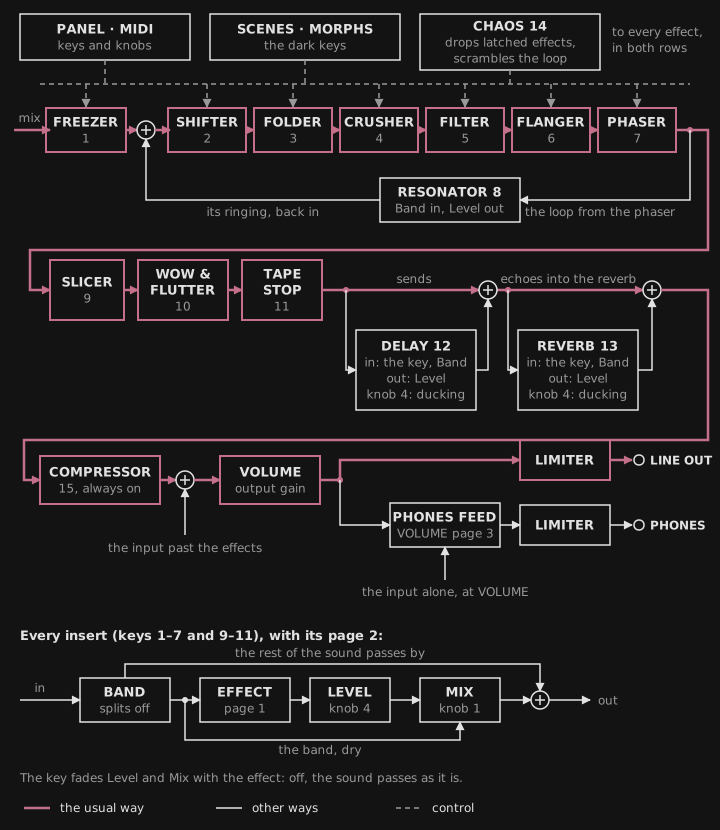
The white keys run in signal order, left to right:
freezer -> shifter -> folder -> crusher -> filter -> flanger -> phaser -> slicer -> wow & flutter |<------------------- resonator loop -------------------->| -> tape stop -> delay -> reverbThe white keys are of these kinds:
- Inserts, white keys 1-7 and 9-11 (the freezer to the phaser, then the slicer, wow & flutter and the tape stop): replace the signal while on and stop the moment they’re off. The tape stop spins back up first.
- The resonator, white key 8: a comb feedback loop. While on, it taps the signal after the phaser and feeds it back in after the freezer, so it rings through the shifter, folder, crusher, filter, flanger and phaser whenever they’re on.
- Sends, white keys 12 and 13 (the delay and reverb): the key opens the effect’s input, and its output is added to the signal, so tails ring out after the key is released.
- White key 14, the chaos key, makes no sound of its own but plays with the others. White key 15 is the master compressor’s, after the chain.
What the order does:
- The freezer comes first, so it captures the clean sound and everything after it works on the repeats. The folder folds the clean signal and the crusher grinds the folds; the filter sweeps both, and the flanger and the phaser sweep what they made. The slicer chops everything, the resonator’s ringing too.
- Wow & flutter and the tape stop are the last inserts, so they bend everything before them. They come before the sends: a tape stop slows the music to a halt while the echoes and the reverb ring on.
- The delay gets the inserts’ output; the reverb gets that plus the delay’s echoes, so the echoes are reverberated while both are on. The delay’s tail rings out as plain echoes: its random events only start while its key is on.
Tempo and MIDI
Section titled “Tempo and MIDI”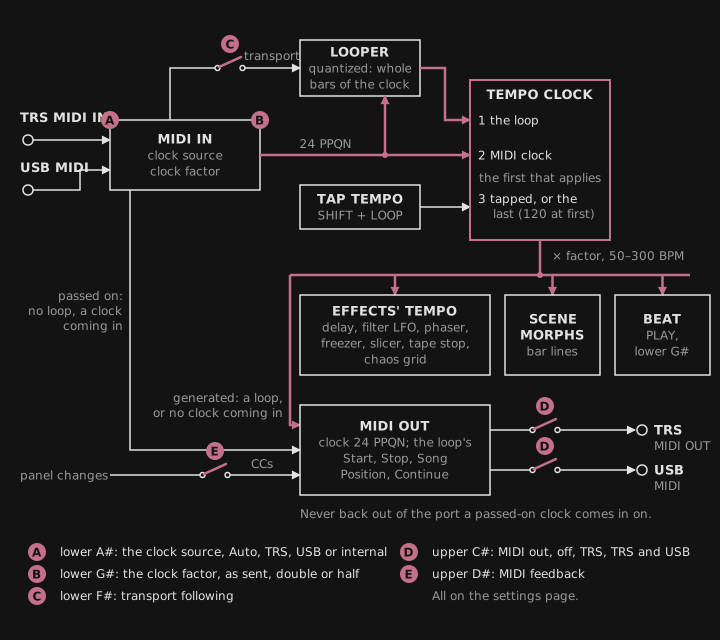
The effects that follow a tempo share it with a quantized recording and MIDI out: see Tempo and transport. MIDI comes in over TRS and USB alike, and MIDI out sends FRIZZ’s clock and the loop’s transport: see Appendix: MIDI.